
Article FAQs
Why does BIM coordination break down at handover?
Most handover failures trace back to fragmented information specs managed across disconnected tools, changes that never reach the right people, and documentation that drifts from what was built.
What do the best project teams do differently?
They treat handover as something to plan for from day one, establishing a single source of truth for project data, clear change communication processes, and documentation that remains accurate and accessible long after construction is complete.
How does Openings Studio support better handover?
Openings Studio gives architects, spec writers, contractors, distributors, and facility managers one connected environment to access current project data, track changes, and carry accurate information from design through operations.
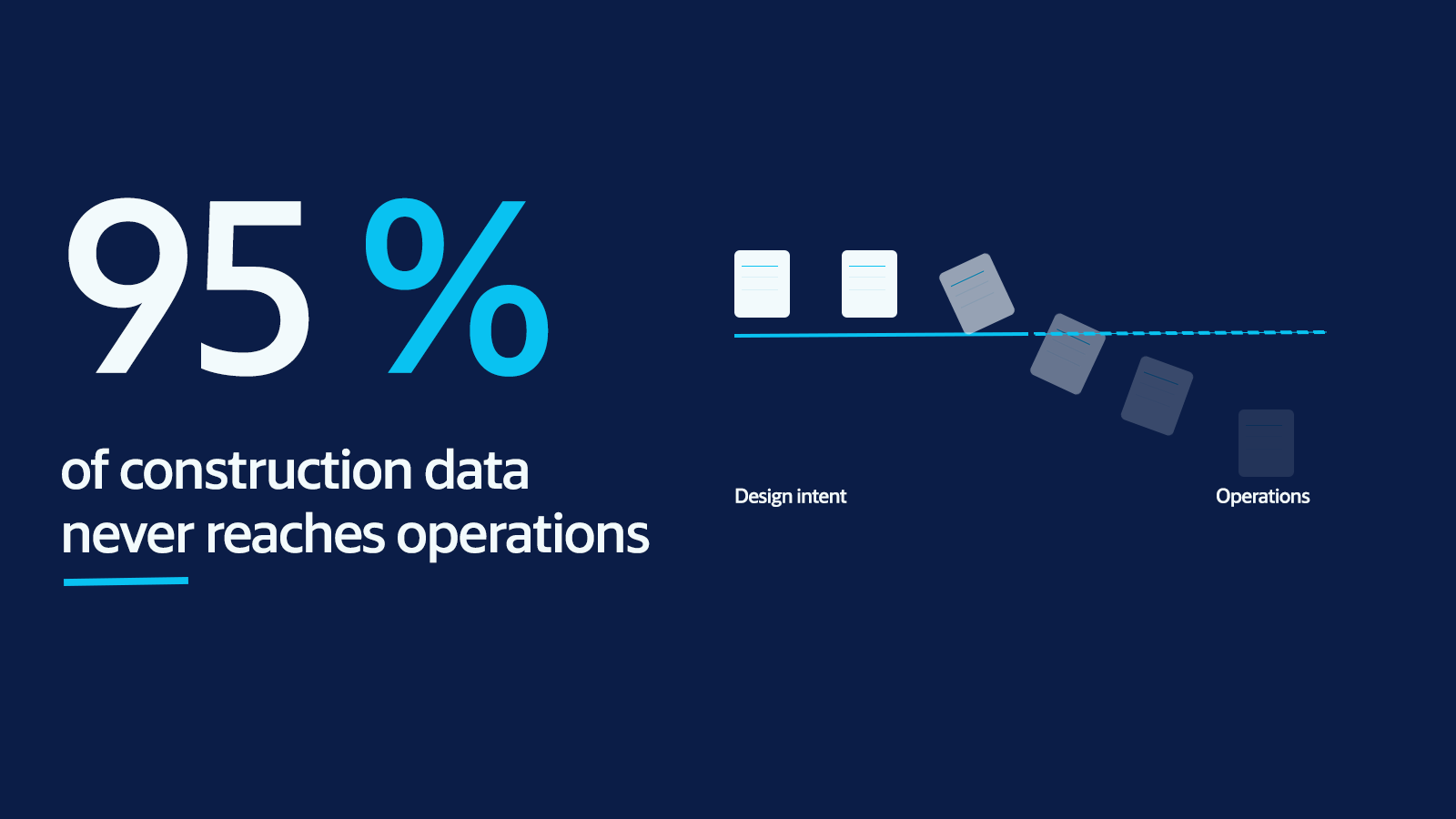
Handover is supposed to be the moment a project comes together. Instead, industry research finds that up to 95% of construction data never reaches operations.
Architects lose visibility into how their design intent was executed. Contractors work from specs that no longer reflect the latest changes. Facility managers inherit buildings with incomplete, outdated, or missing documentation.
The root cause is almost never a shortage of information. It is the inability to keep that information current, connected, and accessible to everyone who needs it.
Here is a closer look at why BIM coordination breaks down at handover and what the best project teams do to prevent it.
The gap between design intent and what gets built
Every building project involves a long chain of handoffs from architect to spec writer, spec writer to contractor, contractor to distributor, and eventually to the facility team responsible for keeping the building running.
At each stage, information is interpreted, translated, and passed along. And at each stage, something can get lost.
Door openings are a good example of where this plays out in practice. A single door opening can involve up to 10 trade groups, including architects and structural engineers, hardware consultants, security integrators, flooring contractors, and facility managers.
| Category | Technical Scope | Risk at Handover |
|---|---|---|
| Budget Impact | 1–3% of Total Project Cost (Source: CSI / DHI Industry Benchmarks) | Viewed as a “minor detail,” leading to less oversight and fragmented documentation. |
| Decision Density | 30+ Variables per Opening (Fire/Life Safety, electrified hardware, ADA compliance) | Small changes in one variable (frame depth) often fail to update in the master spec. |
| Stakeholder Count | Up to 10 Trades (Spec writers, Finish Carpenters, Security Integrators, etc.) | Information is siloed in disparate PDFs and spreadsheets rather than a single source of truth. |
| Information Flow | Non-Linear Documentation (RFIs, Change Orders, marked-up submittals) | Design intent is “translated” so many times that the final as-built rarely matches the original spec. |
A small line item with outsized consequences
Taken together, these factors create the conditions for handover failure.
By the time a facility manager receives the keys, the documentation rarely reflects what was actually installed. Specifications drift. Products get substituted without proper documentation. And the people responsible for maintaining the building are left working from an incomplete picture.
Proactive project teams recognize this risk early. They treat handover not as a final event but as something that must be planned for from the very beginning of the project.
When information lives in too many places

Most project teams are not short on information. They are short on a reliable way to manage it. Specs are drafted in one tool, revised in another, and shared through email chains that are difficult to trace.
This is not a people problem. It is a systems problem. Industry research finds that construction professionals spend an average of 14.2 hours per week searching for project information and managing data issues.
When there is no single source of truth for project data, teams default to familiar tools, and information becomes fragmented as a result.
The consequences show up at every stage of a project.
Specification management
Without a centralized system, spec writers move between disconnected PDFs, outdated hardware schedules, and email threads, manually cross-referencing changes that should already be reflected everywhere. Critical life-safety and security updates are easy to miss, and the specification loses its integrity as a result.
Procurement and installation
Contractors make procurement decisions from documentation that no longer reflects the current design. When hardware and electrified components arrive based on outdated schedules, field modifications follow, which can compromise fire ratings, warranties, and installation timelines.
Asset documentation and facility operations
By the time a building changes hands, asset information is often scattered across binders, inboxes, and shared drives. Facility managers spend time locating O&M manuals and system credentials rather than managing the building, and incomplete documentation drives up lifecycle costs from day one.
The best project teams establish early in the process where project information will live, who is responsible for keeping it current, and how updates will be communicated across the team.
Managing change across a project team
Design changes are a normal part of every project. Without a clear process for communicating them, however, the cost of those changes grows significantly at each phase.
The challenge is not the change itself. It is the lag between when a decision is made and when the right people know about it. On large projects with hundreds of door openings, the lag compounds quickly.
An architect updates a hardware selection late in the design phase. The spec writer is not notified. The contractor works from a submittal that predates the change. The distributor quotes from an earlier version of the schedule.
By the time the discrepancy surfaces, it is on-site, where resolution is costly, disruptive, and time-consuming. Small inconsistencies become systemic ones.
Teams that get this right build change management into their workflow from the start and use tools that handle the tracking for them. If a hardware selection changes, the right people are notified immediately, not after damage occurs.
When everyone is working from the same current version of a project, changes become manageable rather than disruptive.
Getting BIM handover right
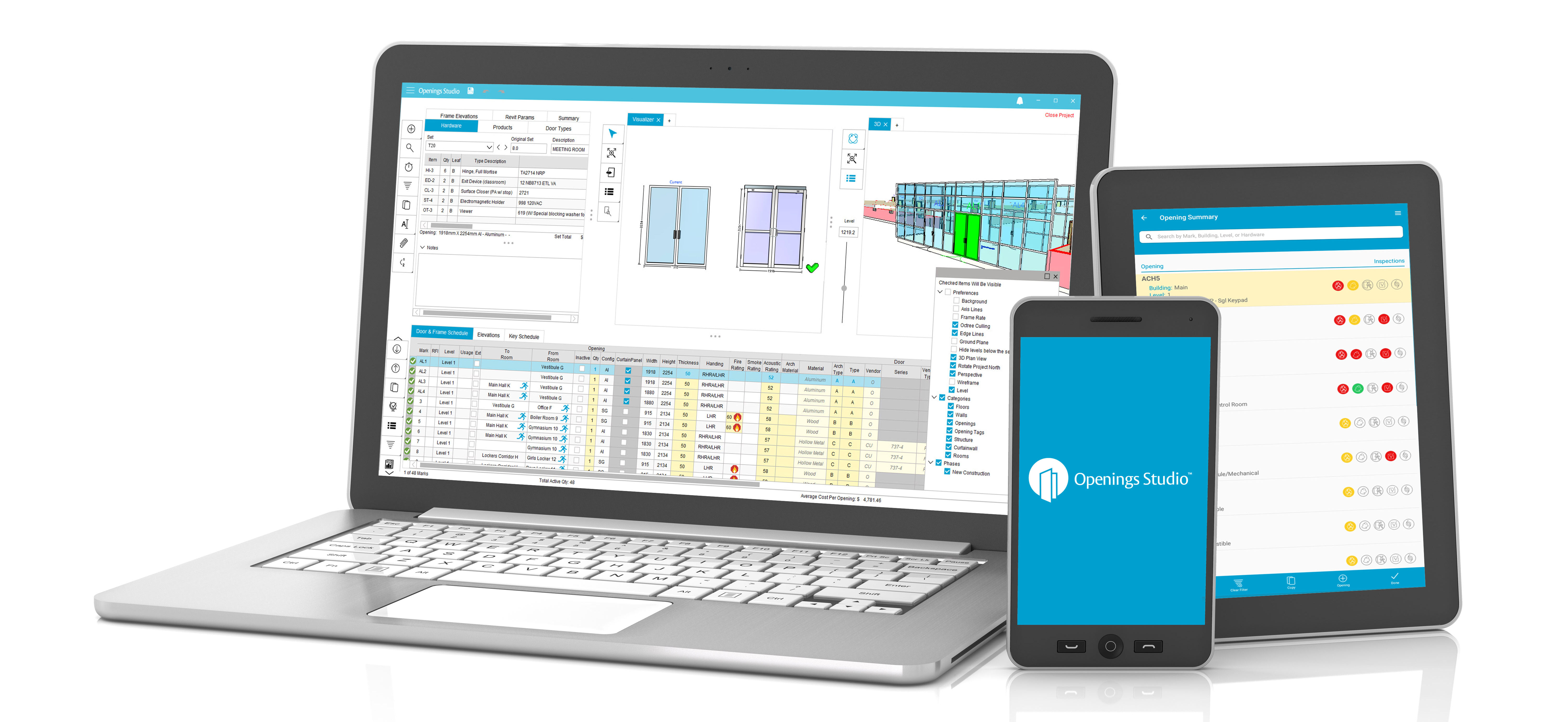
Fragmented handoffs happen when data gets lost or misaligned as a project moves from one phase to the next. The best teams use a centralized platform to establish how information moves and who owns it at every stage.
Openings Studio brings the full project team into a single connected environment, so everyone works from the same current information, from early design through facility operations.
Handover doesn’t have to be where good work gets lost. With the right tools in place, it’s where everything finally comes together.
Request a demo and see how Openings Studio keeps teams aligned from design through handover.